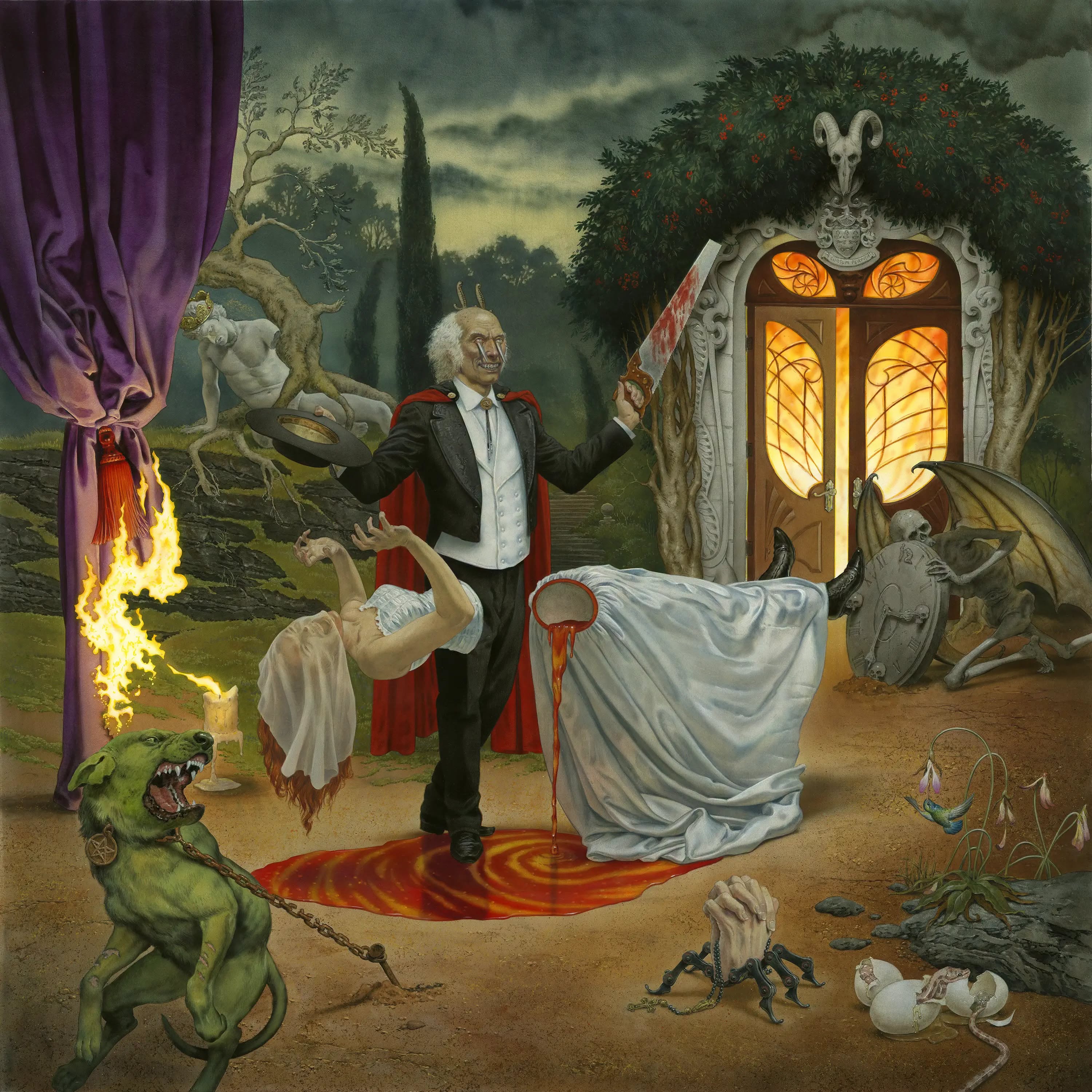



TSAR STANGRA
ХИМНИТЕ НА РАЗРУШЕНИТЕ СВЕТОВЕ (HYMNS OF THE BROKEN WORLDS)
GLOBMETAL PROMOTIONS
JULY 1ST, 2026
REVIEWED BY: JASON DEAVILLE
REVIEW SCORE: 9
THE SETUP
While extreme metal has always chased the primal and the profound, Canada’s Tsar Stangra is one of the rare acts you’ve probably never heard of that truly bridge the gap between ancestral myth and sonic obliteration. On their long-anticipated sophomore full-length, Химните на разрушените светове (Hymns Of The Broken Worlds), the project, founded by Stanislav Stefanovski back in 2007, resurrects the ancient, aggressive spirit of traditional Bulgarian folklore, epic Thracian history, and themes of displacement with a cold, Nordic-inspired edge. The result is a brilliant collision of extreme metal and centuries-old pagan lore that spans the divide of time and space to conquer all.
THE REVIEW
‘TRAKIYTSI – CHERNI HIMNI ZA IZGUBENITE’
Things get off to a brilliant start right out of the gate. While it’s hard to capture my attention this quickly, the song hooks me instantly with luscious, atmospheric keyboard work reminiscent of Amorphis’ Tales From The Thousand Lakes. There is just enough of that old-school Moog synthesiser or Korg M1 (found on songs like ‘Black Winter Day’ and ‘The Castaway’) to inject an eerie folk melody into the grander symphonic black metal complexity on which this track is built.
‘HAN ASPARUH’
This is an absolute banger of the Swedish melodic death metal kind. While there is a definite Somberlain and Storm Of The Light’s Bane thing going on, it sets itself apart from the likes of Dissection by including the traditional Bulgarian tambura (a cross between a lute and a mandolin), which gives the song an uplifting, triumphant feel.
‘CHERNA PESEN’ (‘BLACK SONG’)
Easily the most avant-garde sounding track thus far. The complexity on display here is jaw-dropping, reminding me of early-to mid-era material from Norway’s Solefald. There are things going on here that shouldn’t work in the context of Nordic-inspired black metal: jazz/fusion time signatures, progressive-rock pacing, weird theatrical structures, and tonal shifts that induce vertigo (in much the same way that Japan’s Sigh can make one feel like they are tripping on hallucinogens). As trippy as this song can get, it is anchored by a strong connection to the second wave of Scandinavian black metal.
‘POSLEDNIYAT POHOD’ (‘THE FINAL MARCH’)
This track has an infectiously festive, Pagan energy not unlike that of the mighty Arkona. The guest vocals of Fanny Grenier are incredibly rich and resonant, delivered with a natural vibrato that cuts right through the earthly rumble like an ancestral incantation. A fantastic track that can induce goosebumps if you allow it to penetrate deep.
‘TAGA ZA YUG‘ (‘LONGING FOR THE SOUTH’)
Musically, the first thing that comes to mind is Finnish Humppa. If you are familiar with Humppa, you would know that Finland’s Finntroll are the absolute masters of it. This track has that exact same triumphant, larger-than-life pagan black metal meets folk that can be heard on Fintroll‘s Nifelvind (more specifically ‘Jakten’s Tid’ and ‘Solsagan’). Of course, the difference is that Tsar Stangra weaves a tapestry of lush, chaotic melodies from Balkan folk music. Lyrically, it draws from Konstantin Miladinov’s poem about exile, which he wrote while studying philosophy at Moscow University. Far from home, he experienced profound isolation, exacerbated by a harsh, frigid climate and personal illness. As the story goes, the poem was sparked by a letter from his brother, Dimitar, who urged him to return to their hometown of Ohrid, located in the southwestern part of the modern Balkan peninsula (hence the title).
‘ZEMNI STRAZHI‘ (‘GUARDIANS OF THE EARTH’)
The throat singing is the absolute centrepiece of this song. Perhaps it’s just me, but the cadence of the throat singing on this particular track reminds me of Korn‘s Jonathan Davis and his completely animalistic scatting sessions in the climax of songs such as ‘Twist’ and ‘Freak On A Leash’. The delivery shares that exact same visceral, unhinged energy. Of course, Davis was likely spouting off about how some jock hurt his feelings back in high school, while Stanislav utilizes it to summon the Kukeri (masked folklore figures) who drive away evil spirits and protect the land. Sounds like Mr. Davis could have used a Kukeri of his very own to ward off all those mean jocks.
‘BALGARSKIYAT EZIK’ (‘THE RETURN OF THE NATIVE GOD’)
Tsar Stangra takes the listener all the way back to the mid-90s on this track. There are Borknagar vibes all over this thing, more specifically the Bork‘s self-titled album from ’96. Just like one Oystein G. Brun, Stanislav Stefanovski incorporates some truly brilliant, acoustic classical guitar patterns and sprawling keyboard runs right into the centre of a raging black metal blizzard. The repetition of the riffs works perfectly here, lulling the listener into a trance-like state from which there is no escape. What truly sets this track apart from the mighty Bork is the introduction of soaring female vocals in the last quarter of the song. Absolutely stunning.
‘ZAVRASHTANETO NA RODNIYA BOG’
Just when you think you figured this band out, the album ends with an unexpected trip into the eccentric that I can only compare to one of my favourite songs of all time: Solefald‘s ‘Mont Blanc Providence Crow.’ For just over three minutes, Tsar Stangra leaves behind the pagan/folk in favour of a chaotic, avant-garde musical work that combines a plethora of erratic vocal patterns and bombastic arrangements, keeping you entirely off-balance and making you anticipate what’s around the corner.
THE VERDICT
With Химните на разрушените светове (Hymns Of The Broken Worlds), Tsar Stangra have crafted an absolute masterclass of musical fusion that honours the ancient past while pushing the boundaries of what we expect of pagan metal. This thing goes far beyond your standard extreme metal fare with a few superficial folk instruments thrown in; it is a brilliant, deeply literate, and complex piece of musical art. For listeners who crave intellectual depth, historical weight, and unrelenting musical extremity with complexity, this album absolutely deserves your time and attention.